

Lilabati
Lilabati
Couldn't load pickup availability
- single-origin heirloom
- cultivated with love
- nature-friendly farming
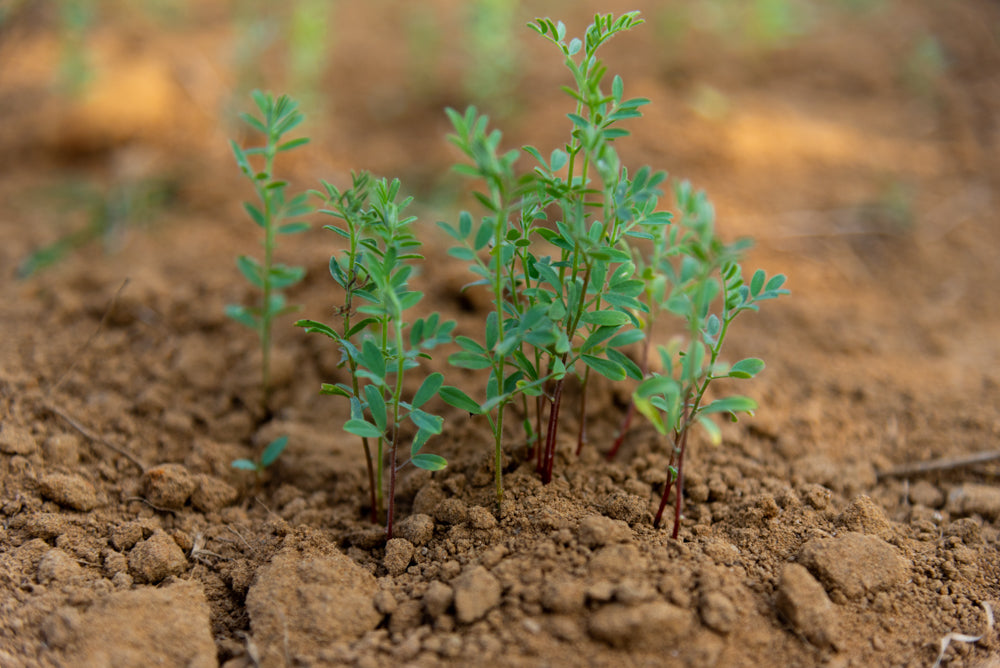
Lilabati — occasionally written as Leelabati / Nilabati / Neelabati — is an aman (winter) heirloom paddy variety from the lower Gangetic plains lying at the south in the Indian state of West Bengal. Historically, this crop is well-known for yielding scented folk-rice across centuries.
In fact, Lilabati has been a traditional name given to the daughters of the Bengali households since ages. Agricultural conservationists and chroniclers feel, this affectionate gesture to christen a paddy plant like the female offspring of the family reflects the deep bond and the marked respect which the farmers hereditarily share with or hold for this produce as the natural blessing of the mother earth and the embodiment of future wealth.
Two early references of this heirloom paddy variety from late-medieval Bengal can be found in the Kamalamangala and the Lakṣmi Sarasvati — two poetical works composed by Krishnaram Das and Srikrishna Kinkar during the second half of the seventeenth century and the second quarter of the eighteenth century respectively. Kinkar for example, referred to the generation of Lilabati paddy from the forehead of Goddess Lakshmi, highlighting how this impressive paddy was even capable of pleasing Lord Vishnu:
‘লক্ষ্মীর ললাটে ধান্য জন্মে লীলাবতী।
সেই ধান্যে তুষ্ট হয় বৈকুণ্ঠের পতি।।’
During the period of British rule, this traditional paddy landrace was cultivated at the 24-
Parganas in the southern parts of colonial Bengal. Official British records confirmed
‘Lilaboti’ to be ‘a race of scented rice’. Yet, cultivation of this long-standing paddy crop has become rare since the Green Revolution, which has brought the high-yielding and the hybrid paddy varieties to the forefront from the 1970s. It has been surviving in remote pockets where the marginal farmers have been cultivating this crop in coastal parts of West Bengal and Orissa. Only very recently, some efforts are being directed to consciously cultivate this ‘non-Basmati’ type of aromatic folk-rice and conserve its seeds in government and organisational seedbanks.
Among the different ‘non-Basmati’ varieties of aromatic folk-rice found in Bengal, Lilabati
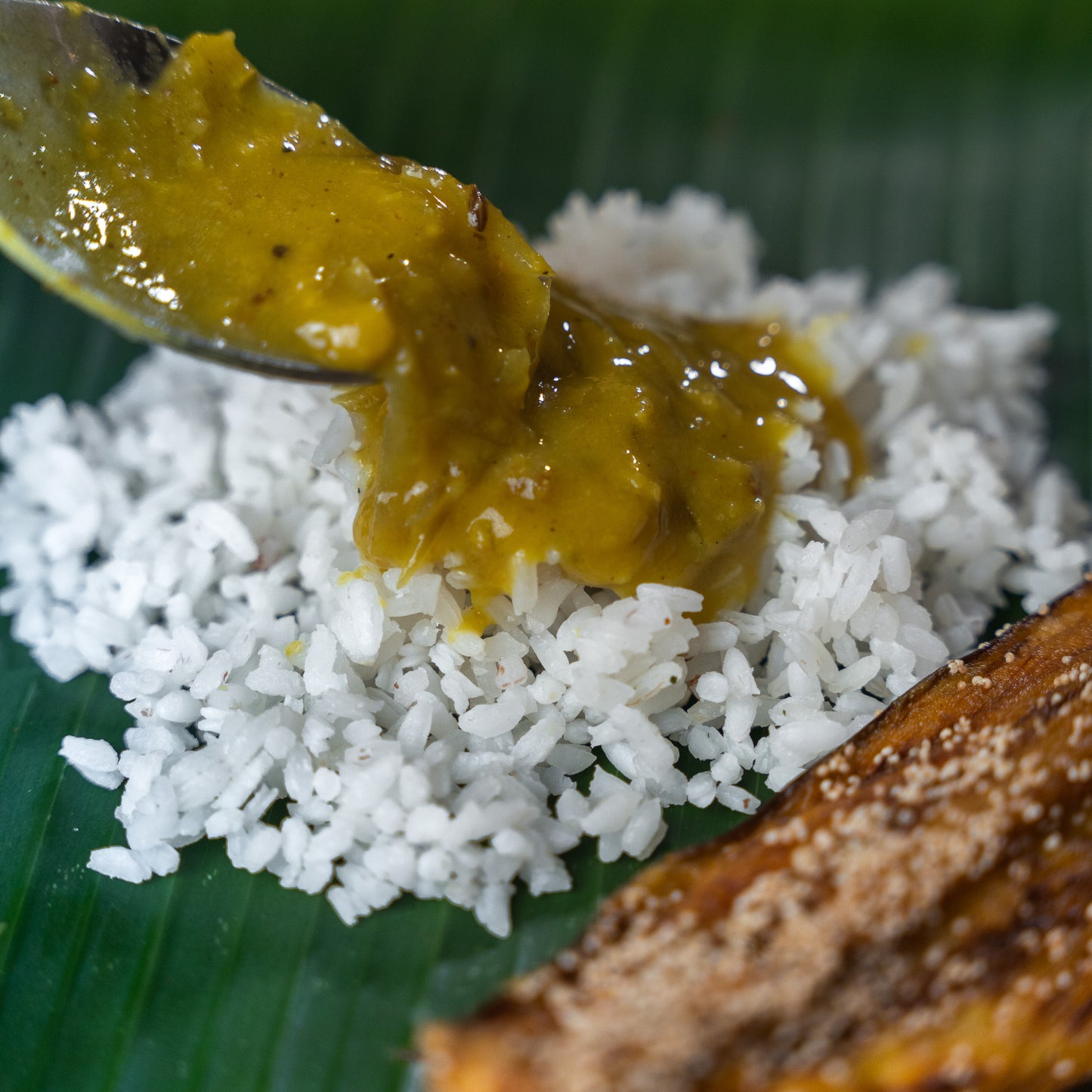
falls within the category of ones which contain slightly higher levels of amylose starch. This is why its kernels remain distinct, non-sticky and aromatic, after suitable boiling and cooking. So, Lilabati ideally functions as an aromatic table rice, eaten often on special occasions. The flour of this aromatic folk-rice is also used to make patisapta (the traditional rice pancake which serves as a type of the classical, handmade sweetmeats called pithe in Bengal). Recent research reveals how this folk-rice grain is micro-nutritionally rich, with high levels of iron and zinc content.
To keep up with the rich legacy of its age-old farming, Amar Khamar curates this traditional folk-rice from the farming community of the North 24-Parganas district in West Bengal.
| taste |
mildly sweet |
|
aroma |
●●○○○ |
|
appearance |
white, short-grain |
|
cooking |
absorption method |
| time | 8-12 minutes |
| storage |
store it in an air-tight jar to retain the aroma in cool, dry, dark place |
what you can cook with
A good table rice, Lilabati pairs wonderfully with dal and bhaja, with a generous drizzle of ghee, of course!
what you can cook with
Cooking rice, apparently, does not seem much: you just need to add rice to water and you are all set. But it does not take ½ a cup of water more or less to turn it into an act of blasphemy. So here we have for you the ultimate guide on how to cook the perfect rice

| botanical name | Oryza sativa |
| origin | North 24-Parganas |
| processing | atap (non-parboiled) |
our philosophy
We believe that the way we cultivate, process, buy, and cook our food can change the world for better. Every time you decide to buy food that has been produced in a sustainable way, you make the world a better place. Learn more about our manifesto.